

Resale Plots vs First-Sale Plots in Trichy
Buying a residential plot in Trichy is an important financial decision. While location, road connectivity and price are usually the first things buyers consider, another common question is:
Should I buy a resale plot or a first-sale plot?
At first glance, a first-sale plot may appear more attractive because it is being purchased directly from a developer or promoter. Resale plots are sometimes viewed as older properties or properties with greater documentation risk.
But that assumption is not always correct.
A plot purchased from a developer today can become a resale plot within a short period if the original buyer decides to sell it. The layout may still be relatively new, properly approved and equipped with good roads, electricity, drainage and other amenities.
Similarly, a first-sale plot is not automatically better or risk-free simply because you are the first buyer.
The better approach is to evaluate the individual property based on its seller, ownership, transaction history, documents, approvals, infrastructure, location, price and future suitability.
Let’s compare both options in detail.
What Is a Resale Plot?
A resale plot is a plot that has already been purchased by another person or entity and is now being sold to a new buyer.
The current seller could be:
An individual owner
Joint owners
A family
An investor
A company
An earlier purchaser of the same development
For example, a buyer may purchase a plot from a developer in a new residential layout in Trichy. After one year, the buyer decides to sell the property.
For the next buyer, it is a resale plot.
However, the layout itself may still be relatively new.
It may already have:
Good internal roads
Electricity infrastructure
Drainage
Streetlights
Parks or open spaces
Defined plot boundaries
Developing houses
Good road connectivity
Other project amenities
Therefore, buyers should distinguish between the age of the ownership transaction and the age of the layout.
A resale transaction does not necessarily mean that the property is old.
What Is a First-Sale Plot?
A first-sale plot is generally a plot being sold to the first purchaser by the developer, promoter or original seller.
The buyer becomes the first purchaser in that particular transaction.
Depending on the development and its stage, a first-sale project may offer features such as:
Planned internal roads
Electricity infrastructure
Drainage
Street lighting
Parks or open spaces
Defined plot boundaries
Security arrangements
Community amenities
However, buyers should verify the actual approvals, documents, infrastructure and amenities of the specific project rather than assuming that every first-sale development offers the same facilities.
Resale Plot vs First-Sale Plot: The Real Difference
The simplest difference is who you are buying from and whether the property has already been transferred to another owner.
Factor First-Sale Plot Resale Plot
Seller Developer / promoter / original seller Existing owner / investor / company
Buyer First purchaser Subsequent purchaser
Transaction history First transaction One or more previous transactions
Plot availability Usually more choices Depends on available resale plots
Price Generally based on current project pricing May offer negotiation potential
Layout age Can be new or developing Can be new, established or old
Infrastructure Depends on project stage Can already be visible
Documentation Original ownership and approvals need verification Previous ownership and transaction history need verification
Amenities Depends on the project Depends on existing development
Investment potential Depends on location and entry price Depends on location and purchase price
The important point is:
> The word “resale” tells you that the property has had a previous owner. It does not by itself tell you whether the property is good or bad.
Can a Resale Plot Be Almost Like a First-Sale Plot?
Yes.
This is one of the most important things buyers should understand.
Imagine a new plotted development in Trichy.
First year
Buyer A purchases a plot from the developer.
After one year
Buyer A decides to sell the plot because their financial or construction plans have changed.
Next transaction
Buyer B purchases the plot from Buyer A.
For Buyer B, this is a resale plot.
But the property could still be:
In a relatively new layout
Properly approved
Well connected
Surrounded by developing infrastructure
Supported by good amenities
So, simply seeing the word “resale” should not make a buyer reject the property.
Instead, investigate the property’s actual history, documents, approval status, location and the reason for resale.
Why Do Owners Sell Plots Soon After Buying?
There can be many normal reasons for a property being resold shortly after the original purchase.
For example:
Change in financial plans
Relocation
Change in employment location
Decision to construct a house elsewhere
Family circumstances
Requirement for funds
Purchase originally made as an investment
Change in preferred location
Opportunity to invest in another property
Therefore, the fact that a plot is being resold after a short period does not automatically indicate a problem.
However, it is reasonable for a buyer to understand why the owner is selling
Where Resale Plots Need Extra Attention
Although a resale plot is not automatically risky, buyers should be more careful when dealing with properties that have a long or complicated transaction history, especially plots in much older layouts.
Several aspects deserve attention.
1. Older Layouts
An older layout may have documentation and approval circumstances that are different from those of a recently developed layout.
Buyers should verify the relevant approval status rather than assuming:
> “This layout has existed for many years, so everything must be legally clear.”
The age of a neighbourhood or the presence of existing houses does not, by itself, establish the complete legal status of a plot.
Some older properties may have undergone regularisation or may have documentation relating to regularisation.
In such cases, buyers should understand the property’s actual status.
Ask:
What was the original status of the property?
Was any regularisation obtained?
What documents support it?
Does the present property correspond with the relevant records?
Are there any conditions or restrictions?
The term “regularised” should not be treated as a substitute for proper document verification.
3. Previous Transactions and Title Chain
A resale property has a previous ownership history.
An older property may have passed through several owners.
For example:
Original Owner → Buyer 1 → Buyer 2 → Current Seller → New Buyer
The buyer should verify whether each stage of the ownership chain is properly documented.
Particular attention should be given to:
Previous sale deeds
Parent documents
Current ownership
Revenue records
Property-related dues
Boundaries and survey details
The more complicated the transaction history, the more important professional legal verification becomes.
4. Possible Double-Entry or Conflicting Transaction Issues
Older properties with complicated histories may sometimes require additional scrutiny for conflicting documents or claims.
Buyers should be cautious if:
Plot numbers do not match
Survey details differ
Boundaries differ between documents
Different documents appear to describe the same property
Previous ownership is unclear
Multiple transactions appear inconsistent
Important historical documents are unavailable
There are conflicting claims
A low price should never be the reason to overlook such issues.
Does “Direct Owner Plot” Mean It Is Safer?
Not necessarily.
The term “direct owner plot in Trichy” simply indicates that the buyer is dealing directly with the current owner rather than through an intermediary.
The owner could be:
An individual
A family
Joint owners
An investor
A company
Direct dealing can sometimes make communication and negotiation easier.
But it does not automatically prove:
Clear title
Valid approvals
Absence of encumbrances
Correct ownership
Proper road access
Reasonable pricing
Instead of asking only:
“Is this a direct owner plot?”
ask:
“Who owns the property, and can that ownership be legally established?”
That is the more important question.
First-Sale Doesn’t Mean No Verification
The same principle applies to first-sale plots.
A first-sale property may have fewer previous transactions to investigate, but buyers still need to verify the developer’s ownership and project documentation.
Before buying a first-sale plot, consider checking:
Parent documents
Developer/promoter ownership
Layout approval
Applicable planning approvals
Encumbrance
RERA applicability and registration, where applicable
Sale agreement
Sale deed
Plot dimensions
Road access
Infrastructure commitments
Actual site condition
A buyer should also compare what is promised with what is actually available at the site.
Price and Negotiation
Price is one of the biggest factors when comparing resale plots and first-sale plots.
A resale owner may have greater flexibility in negotiation depending on:
Reason for selling
Holding period
Financial requirement
Current market conditions
Location
Demand
Original purchase price
Development in the surrounding area
First-sale plots generally follow the developer’s prevailing pricing structure.
However, first-sale projects may also have:
Launch pricing
Promotional offers
Location-based pricing
Different prices for corner plots
Different prices for larger plots
Applicable development charges
Therefore, don’t compare only the advertised price per square foot.
Compare:
Plot price + development charges + registration expenses + applicable fees + other costs
The total acquisition cost gives you a more realistic comparison.
Location and Surroundings
A resale plot can offer one significant advantage:
You can often see the neighbourhood as it exists today.
You may be able to evaluate:
Existing houses
Nearby roads
Shops
Schools
Hospitals
Public transport
Electricity infrastructure
Water availability
Residential activity
Surrounding development
This gives buyers a better understanding of the current environment.
A first-sale plot in a developing corridor may have less surrounding development at the time of purchase.
But that is not necessarily a disadvantage.
Some buyers deliberately enter developing locations early because they expect infrastructure and residential activity to expand.
However, buyers should distinguish between:
Development that exists today
and
Development that is only expected in the future.
Future growth should be evaluated realistically rather than assumed to be guaranteed.
Infrastructure and Amenities
Infrastructure should always be evaluated based on what is actually available.
For a resale plot, buyers can often inspect:
Roads
Electricity
Drainage
Streetlights
Parks
Surrounding houses
Access roads
For a first-sale project, some infrastructure may already be completed while other facilities may still be under development.
Therefore, ask two separate questions:
What exists today?
and
What is promised for the future?
This distinction is particularly important when buying a plot in a developing area.
Which Is Better for Home Construction?
If your main objective is to construct a house, your priorities may be different from those of an investor.
A resale plot in an established neighbourhood may provide:
Existing residential surroundings
Better understanding of local conditions
Established access
Nearby services
Existing houses in the area
A first-sale plot may be attractive if you prefer:
Planned development
New infrastructure
Modern layout planning
Community amenities
A developing residential corridor
Your construction timeline should also influence your decision.
If you plan to construct immediately, the current condition of roads, electricity, water, drainage and surrounding development may be more important than future promises.
Which Is Better for Investment?
There is no universal answer.
Instead of asking:
“Is resale better?”
or:
“Is first-sale better?”
ask:
> “Which property offers the better combination of location, legal clarity, purchase price and future demand?”
A first-sale plot may provide early entry into a developing location.
A resale plot may provide an opportunity to negotiate and acquire a property in an established area.
Both can be suitable investments.
Neither category automatically guarantees appreciation.
What Determines Plot Investment Potential?
Whether you are considering residential plots in Trichy or a plot for personal construction, look beyond the sale stage.
Consider:
Location
Is there genuine residential demand in the area?
Connectivity
How easily can residents reach major roads and important parts of Trichy?
Infrastructure
Are roads, electricity, drainage and other essential facilities available?
Surrounding Development
Are houses, commercial establishments and other developments actually increasing?
Entry Price
Are you buying at a reasonable price?
Legal Clarity
Can the title and relevant approvals be independently verified?
Future Demand
Is there a reasonable basis for expecting continued demand for residential land?
The terms resale and first-sale should not be the deciding factors by themselves.
A Good Resale Plot Can Be Better Than a Poor First-Sale Plot
This is perhaps the simplest way to understand the comparison.
Imagine two properties.
Property A – Resale
Recently purchased by the current seller
Properly documented
Appropriate approvals
Good road connectivity
Existing infrastructure
Good surroundings
Reasonable price
Property B – First-Sale
Higher price
Developing surroundings
Some infrastructure still under development
Future amenities yet to be completed
Which one is better?
There is no need to choose based solely on the label.
Property A could be the better purchase even though it is a resale plot.
The reverse can also be true.
A well-located, properly documented first-sale plot may be a better choice than an older resale property with a complicated transaction history.
Don’t Decide Only by Price
Suppose you find:
Resale plot – Rs.1,500/sq.ft
and
First-sale plot – Rs.2,000/sq.ft
It would be wrong to immediately conclude that the resale plot is better simply because it is cheaper.
The resale property may have:
Better location
Established surroundings
Existing infrastructure
Negotiation potential
But it may also require additional scrutiny of:
Previous transactions
Title chain
Approval status
Regularisation history, where applicable
Boundaries and survey details
Similarly, the first-sale property may provide:
Better planned infrastructure
More plot choices
Newer development
Community amenities
Early entry into a developing corridor
But it may have a higher entry price or infrastructure that is still under development.
Therefore, compare the complete proposition, not just the quoted price.
First-Sale Plot Options in Trichy
Trichy has several residential growth corridors where buyers can evaluate plotted developments according to their budget, construction plans and investment objectives.
Trichy Ponmanai’s project portfolio includes CKP Garden, CKP Emerald, CKP Avenue and CKP Castle, positioned in different locations and development contexts.
However, every project and every plot should be evaluated independently.
Buyers should consider:
Location
Approval status
Ownership
Road connectivity
Infrastructure
Surrounding development
Plot dimensions
Price
Amenities
Long-term suitability
The objective should be to help buyers choose the right property, rather than assuming that every first-sale project is automatically better than every resale property.
How to Choose Between Resale and First-Sale Plots
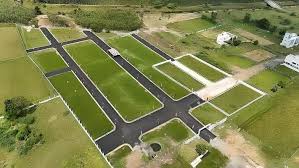
A resale plot may suit you if you prioritise:
 Established surroundings
Existing infrastructure
A mature location
Potential price negotiation
Ability to inspect the current neighbourhood
A recently purchased property with a relatively simple transaction history
A first-sale plot may suit you if you prioritise:
More plot choices
Newer planned development
Project-level infrastructure
Community amenities
Early entry into a developing location
Direct purchase from the developer/promoter
These are preferences—not guarantees.
The actual property should always be evaluated independently.
Buyer Checklist: Before Buying a Resale Plot in Trichy
Before paying an advance, consider checking the following.
Ownership
 Who is the current owner?
Does the seller have the legal right to sell?
Are all required owners participating in the transaction?
Transaction History
How many times has the property been sold?
Can previous sale deeds be produced?
Is the title chain consistent?
Approval
Is the layout approved?
What approval applies to the property?
Is there any regularisation history?
Documents
Parent documents
Previous sale deeds
Current ownership documents
Encumbrance records
Patta/revenue records, where applicable
Property tax records, where applicable
Property Details
Plot dimensions match the documents
Survey details match
Boundaries match
Road access is clear
No apparent physical encroachment
No conflicting claims
Site
Visit the property personally
Check roads
Check electricity
Check drainage
Check surrounding development
Check accessibility
For properties with complicated histories, professional legal verification is advisable before committing funds.
Buyer Checklist: Before Buying a First-Sale Plot
For a first-sale plot, consider checking:
Developer/promoter ownership
Parent documents
Layout approval
Applicable planning approvals
Encumbrance status
RERA applicability, where applicable
Sale agreement
Sale deed
Plot dimensions
Road access
Infrastructure actually completed
Amenities actually available
Total purchase cost
Development commitments
Most importantly, compare the documents with the actual property at the site.
Don’t Confuse “New” With “First-Sale”
Another useful distinction for buyers is the difference between a new layout and a first-sale transaction.
A new layout can have resale plots.
For example, an investor may purchase several plots in a newly launched development. If the investor later sells one of those plots, the transaction is a resale—even though the layout itself may still be new.
Similarly, an older property may theoretically still be available for a first transaction from a particular owner or entity depending on its ownership history.
Therefore:
Property age, layout age and transaction stage are three different things.
Understanding this distinction can help buyers evaluate properties more accurately.
The Golden Rule: Verify Before You Buy
Whether you choose a resale plot or a first-sale plot, don’t make the decision based purely on marketing terminology.
A sensible process is:
Identify the property → Verify ownership → Check documents → Verify approvals → Inspect the site → Check infrastructure → Compare total cost → Evaluate location → Seek professional advice where necessary → Then proceed
This approach can help reduce the possibility of making a costly decision based only on price or promotional claims.
For information related to the registration process, buyers can also refer to our guide on property registration in Tamil Nadu before completing their purchase.
Final Verdict: Resale or First-Sale?
There is no universal winner.
A resale plot can be an excellent choice if it offers:
Clear title + appropriate approvals + good location + suitable infrastructure + reasonable price
A first-sale plot can also be an excellent choice if it offers:
Clear ownership + appropriate approvals + suitable location + planned infrastructure + reasonable entry price
A plot purchased from a developer can become a resale property within a short period while still having good legal documentation, infrastructure and amenities.
The main difference is that in a resale transaction, you are buying from the existing owner and need to understand the property’s previous transaction history.
For older resale properties, buyers should pay particular attention to:
Title chain + previous transactions + approval status + regularisation history where applicable + possible documentation inconsistencies.
For first-sale properties, buyers should focus on:
Developer ownership + approvals + documents + infrastructure + actual project commitments.
So, don’t ask only:
“Is this a resale plot or a first-sale plot?”
Instead ask:
“Who am I buying from, what is the property’s history, are the documents and approvals clear, what infrastructure exists, and is the price justified?”
That is the better way to evaluate plots for sale in Trichy.
The right plot is not necessarily the one labelled “first-sale” or “resale.”
The right plot is the one that offers the right combination of location, legal clarity, infrastructure, price and long-term suitability for you.
இன்று ஒரு புதிய மனை வாங்குவது, உங்கள் எதிர்காலத்திற்கான ஒரு சிறந்த முதலீடாக இருக்கலாம். முதல் விற்பனை மனையை வாங்கும்போது, உங்களுக்கு பிடித்த இடத்தையும் அளவையும் தேர்வு செய்யும் வாய்ப்பு கிடைக்கும். நல்ல வளர்ச்சி பெறும் பகுதியில் மனை வாங்கினால், எதிர்காலத்தில் அதன் மதிப்பு அதிகரிக்கும் வாய்ப்பும் உள்ளது. மேலும், உங்கள் தேவைக்கேற்ப எதிர்காலத்தில் வீடு கட்டுவதற்கும் திட்டமிடலாம்.
💰 இன்றைய சரியான முதலீடு — நாளைய மதிப்புமிக்க சொத்து!
நல்ல பதிவு